
The Contest Over Executive Power
Federalist PapersThis thread traces the shift from fears of presidential monarchy to arguments that executive energy and accountability can coexist.
increasing Bearing strength in each event
 decreasing
Bearing strength in each eventdecreasingThe Monarchy Charge

The Monarchy Charge
Suspicion takes form
Critics portray the President as a potential monarch, using royal imagery to make the office appear dangerous. Hamilton replies that this picture depends on exaggerating or misrepresenting the proposed powers.
Detail over analogy
The essay begins a systematic comparison with actual State and British institutions. The conflict shifts from fear of titles and appearances to scrutiny of constitutional authority.
The Case for Unity
The Case for Unity
Energy in action
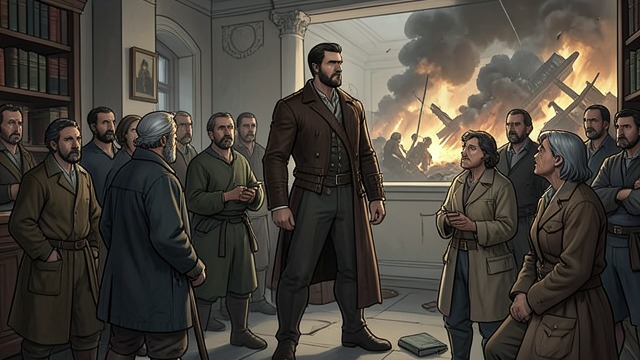
Hamilton argues that executive unity enables prompt, coherent action and makes responsibility visible. A plural executive could become divided precisely when a crisis requires decision.
Safety through accountability
The single executive is not defended as unchecked power. Hamilton presents a visible office as easier for citizens to watch and judge than a collective authority able to diffuse blame.
The Term Dispute

The Term Dispute
Firmness versus dependence
Hamilton argues that a short or insecure term could make a President too responsive to temporary passions or legislative pressure. A longer term gives the executive room to exercise independent judgment.
The public remains sovereign
The President still depends on the people and remains accountable for conduct. The dispute concerns how to balance popular control with enough continuity to govern effectively.
The Reelection Question

The Reelection Question
Continuity challenged
Critics fear that eligibility for reelection could encourage ambition and prolong executive power. Hamilton counters that automatic exclusion could weaken incentives for good administration and discard useful experience.
Choice returned to voters
Hamilton treats continued service as a decision for citizens rather than a prohibition imposed in advance. The argument makes reelection both an administrative benefit and a test of public confidence.
Checks on Executive Action
Checks on Executive Action
Constitutional instruments
Hamilton defends protected compensation and a qualified veto as supports for an independent executive. He presents the veto as both a defense against legislative encroachment and a delay for reconsidering questionable laws.
Shared responsibilities
Treaties and appointments require cooperation with the Senate, while other duties remain defined by the Constitution. The essays answer executive fears by showing how the office is constrained without being made powerless.
Federalist No. 67, March 11, 1788
Federalist No. 70, March 15, 1788
Federalist No. 71, March 18, 1788
Federalist No. 72, March 19, 1788
Federalist Nos. 73–77, March 21–April 2, 1788
